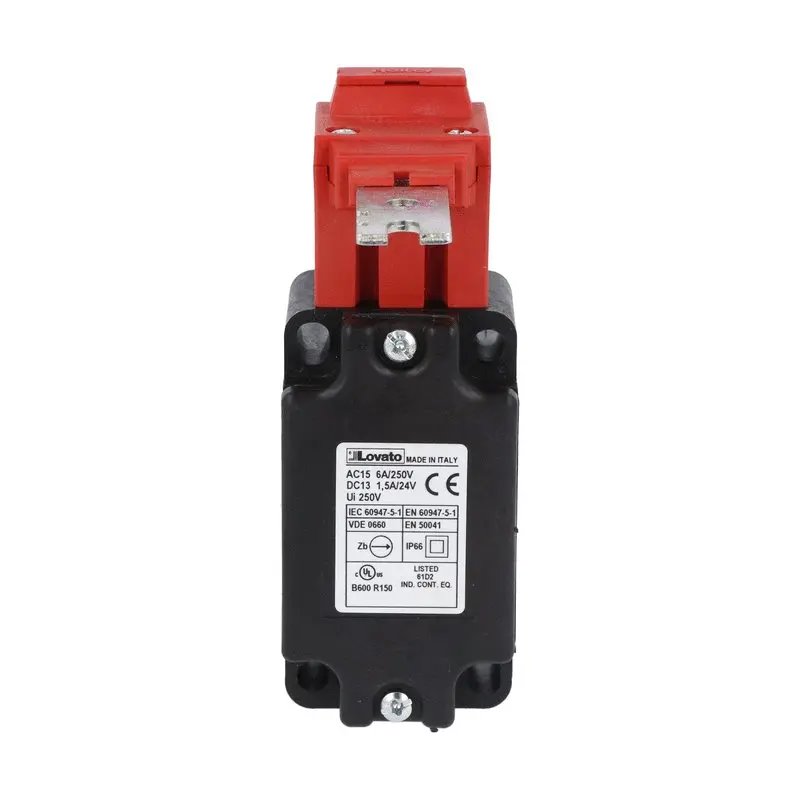
TL21010 - Lovato - Accessory for EN50047/EN50041 limit switch
Available on request

Get your personalized quote now

A dedicated sales representative will assist you to offer the best price and delivery times.

You must be logged

TL21010 - Lovato - Accessory for EN50047/EN50041 limit switch

Lovato
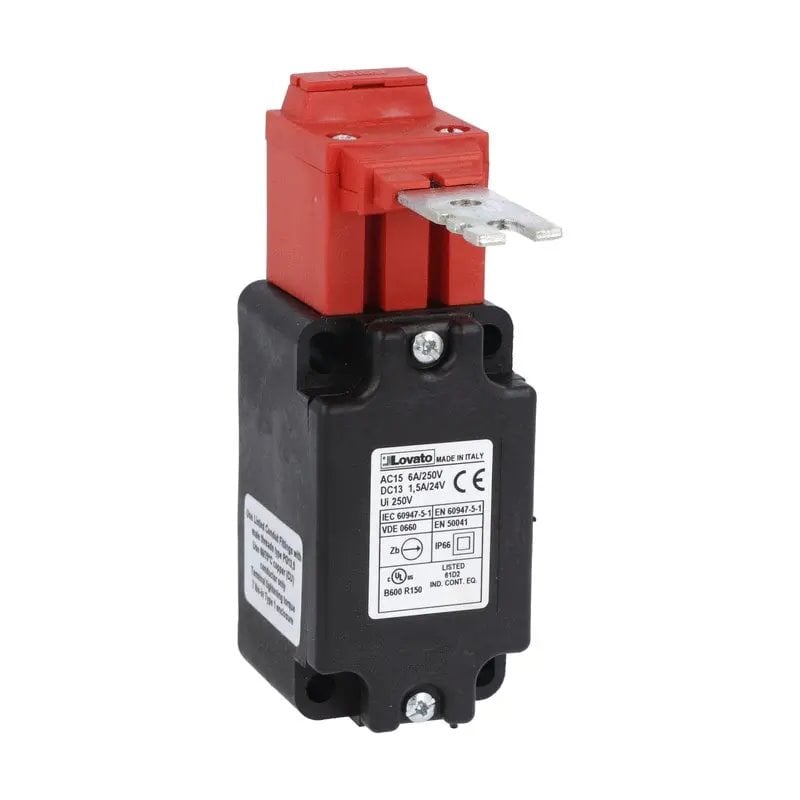
T series plastic limit switch, EN 50041 dimensions, with key actuator, without reset pushbutton, 1 NO + 1 NC slow-action contacts and straight key. T series plastic limit switch, EN 50041 dimensions, with key actuator, without reset pushbutton, 1 NO + 1 NC slow-action contacts and straight key.

MPNs TL21010, LOVTL21010
EAN 8013975085035
HS Code 85365080
Country of origin Italy
Weight 0.14 kg

The product image is for illustrative purposes only.
The country of origin, HS code, and description are provided by the manufacturer and may be subject to change without prior notice. For this reason, PLC-City cannot be held responsible for any discrepancies.
Sold by PLC-CITY® and shipped from Italy

We accept many payment methods: Bank Transfer (SEPA, ACH), Debit/Credit Cards (Mastercard, VISA, American Express, Diners Club, Discover, JCB, UnionPay), PayPal, ApplePay, GooglePay, link by Stripe, Cartes Bancaires, Alipay, Bancontact, blik, eps, giropay iDeal, Przelewy24, WeChatPay.
More information about our payment methods

This product is covered by a 12 Months warranty, valid for manufacturing defects or malfunctions. The warranty does not cover damage caused by improper use or accidental damage.
Learn more about our warranty

Returns are subject to prior authorization and eligible for store credit only. Backordered items are excluded.

View our return policy

Available on request

Get your personalized quote now

A dedicated sales representative will assist you to offer the best price and delivery times.

You must be logged

Product information

Description

<h3>Key actuator accessory for limit switches</h3><p>This key accessory is used with a compatible actuator assembly where the shape of the key defines how the mechanical movement is transferred to the switching device. It supports correct engagement in machine guarding, access monitoring and position-control layouts.</p><h4>Actuation, contacts and wiring</h4><p>contacts 1 NO + 1 NC; contact action slow-action; operating element without reset pushbutton. Actuator style defines the mechanical approach of the moving part, while contact configuration and contact action define the signal delivered to the control circuit. The cable entry and housing information help place the switch correctly on the machine frame and keep wiring serviceable.</p><h4>Commissioning and service checks</h4><p>During commissioning, check the mechanical travel before energizing the circuit, then verify the signal change at the terminal level and in the machine logic. The actuator must return freely and the wiring route must not interfere with the moving part, guard or cam.</p><p>For maintenance, compare actuator type, contact layout, cable entry and operating direction before replacement. A documented position test after installation keeps the relationship between mechanical movement and electrical signal clear for future diagnostics.</p><p>In machine documentation, associate the switch signal with the exact motion step or guard state it supervises. This makes troubleshooting more direct, especially when several similar position devices are wired to the same control panel or safety-related sequence.</p><p>During replacement, keep the same key geometry and check engagement with the actuator before closing the guard or restarting the sequence.</p> <h3>Key actuator accessory for limit switches</h3><p>This key accessory is used with a compatible actuator assembly where the shape of the key defines how the mechanical movement is transferred to the switching device. It supports correct engagement in machine guarding, access monitoring and position-control layouts.</p><h4>Actuation, contacts and wiring</h4><p>contacts 1 NO + 1 NC; contact action slow-action; operating element without reset pushbutton. Actuator style defines the mechanical approach of the moving part, while contact configuration and contact action define the signal delivered to the control circuit. The cable entry and housing information help place the switch correctly on the machine frame and keep wiring serviceable.</p><h4>Commissioning and service checks</h4><p>During commissioning, check the mechanical travel before energizing the circuit, then verify the signal change at the terminal level and in the machine logic. The actuator must return freely and the wiring route must not interfere with the moving part, guard or cam.</p><p>For maintenance, compare actuator type, contact layout, cable entry and operating direction before replacement. A documented position test after installation keeps the relationship between mechanical movement and electrical signal clear for future diagnostics.</p><p>In machine documentation, associate the switch signal with the exact motion step or guard state it supervises. This makes troubleshooting more direct, especially when several similar position devices are wired to the same control panel or safety-related sequence.</p><p>During replacement, keep the same key geometry and check engagement with the actuator before closing the guard or restarting the sequence.</p>

Our Company Reviews